
1. CRAIOVA
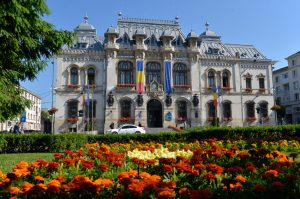
Located in southwestern Romania, in the historical region of Oltenia, Craiova is the seat of Dolj County and one of the most important cities in the south of the country.
Situated on the banks of the Jiu River and approximately 60 km from the Danube, Craiova represents a major economic, cultural, and university hub, located at the intersection of tradition and modernity.
Craiova has deep roots, dating back to the Daco-Roman period, being influenced by the proximity to the ancient Roman fort of Pelendava. In the Middle Ages, the city became the residence of the Bans of Oltenia, and the Craiovești boyar family played an essential role in the development of the region.
In the 18th–19th centuries, Craiova transformed into an important commercial and cultural center, and in the modern period, it became a university and industrial pole. Today, the city preserves the charm of historical architecture, combined with a dynamic urban life.
- Go Visit Craiova: https://www.facebook.com/govisitcraiova
The year 2026 marks 150 years since the birth of Constantin Brâncuși, one of the most important figures of universal culture.
- Constantin Brâncuși at the Art Museum: https://muzeuldeartacraiova.ro/ro/index.php/constantin-brancusi/
- Brâncuși 150 Project: https://discoverpestisani.ro/category/brancusi-150/
- The Brâncuși Year Portal: https://www.anulbrancusi.ro/
2. TOURIST ATTRACTIONS
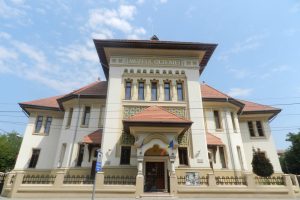
2.1. THE ART MUSEUM – JEAN MIHAIL PALACE
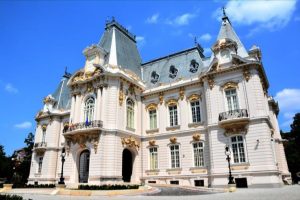
Built between 1898 and 1907 in the midst of a city seized by the fever of innovations at the beginning of the 20th century, the Mihail Palace stands out through the execution details that have the distinction of a meticulously crafted piece of jewelry. They reflect the demands and social status of one of the richest men of the time, as well as the ambition and spirit of competition that helped him amass his fortune.
Thus, if Ghe. Grigore Cantacuzino, nicknamed “The Nabob,” in Bucharest and the royal counselor Vălimărescu, on the same street, had entrusted the construction of their houses to the famous architect Albert Galleron, who had designed, among other important buildings in the Kingdom, the Romanian Athenaeum, Constantin Mihail did not let himself be outdone. He turned to another famous name of the era: Paul Gottereau, the architect of the Royal House and author of the “Carol I” University Foundation Palace, the CEC Palace, the extension of the Royal Palace, and others.
- Art Museum Virtual Tours: https://muzeuldeartacraiova.ro/ro/index.php/tururi-virtuale/
- Mihail Palace Interactive Virtual Tour: https://muzeuldeartacraiova.ro/turvirtual/mac.html
2.2. MUSEUM OF OLTENIA – HISTORY SECTION
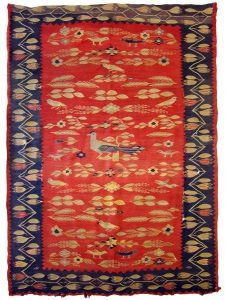
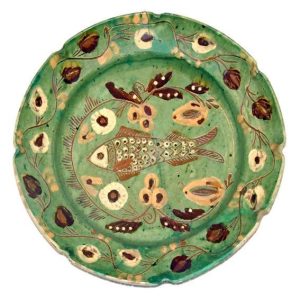
The Museum of Oltenia Craiova was established on April 1, 1915, as a result of the passion and dedication of prominent families in Craiova at the beginning of the 20th century, but especially following the tireless efforts of the well-known cultural personality, Ștefan Ciuceanu.
Currently, the Museum of Oltenia Craiova carries out its activity in four buildings: the History-Archaeology Section, at 14 Madona Dudu Street; the Natural Sciences Section, in the Ramuri Palace, at 8 Popa Șapcă Street; the Ethnography Section, at Casa Băniei; and the Restoration and Conservation Laboratory, at 14 Madona Dudu Street, in the building known as the Extension of the History-Archaeology Section.
- Museum of Oltenia Virtual Tour: https://old.muzeulolteniei.ro/cv/Tur%20Virtual/index.html
- Museum of Oltenia Official Site: https://muzeulolteniei.ro/
2.3. NICOLAE ROMANESCU PARK
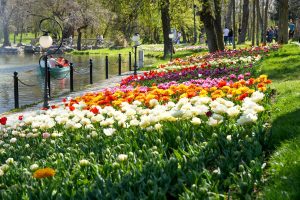
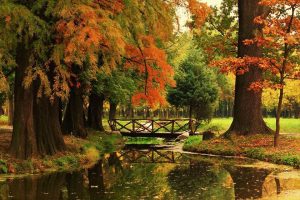
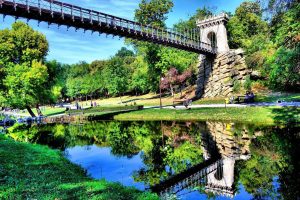
“Nicolae Romanescu” Park is one of the famous destinations of the municipality of Craiova. Spanning an area of 90 hectares, it was inaugurated in 1903, with works beginning in 1897. King Carol I and Queen Elisabeth attended the event, and the park was designed by the French landscape architect Édouard Redont. His project plan won the Gold Medal at the 1900 Paris International Exposition.
The park’s name comes from the mayor during whose term it was developed and who contacted the landscape architect who would make the place known at a European level. In the past, this was the estate of Iancu Bibescu, after which it was sold to the city and for a period the place bore his name.
A tree plantation, a hippodrome, a suspended bridge, alleys and paths, a Zoo, and an Enchanted Castle are the main attractions. It is unique in the country due to its urban project and ranks third in Europe in terms of size.
- Nicolae Romanescu Park Presentation: https://www.primariacraiova.ro/ro/a/2535/parcul-nicolae-romanescu
2.4. CRAIOVA EASTER FAIR 2026
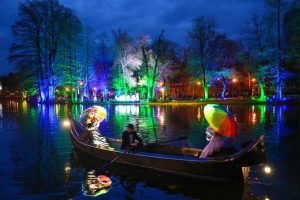
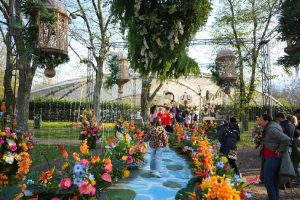
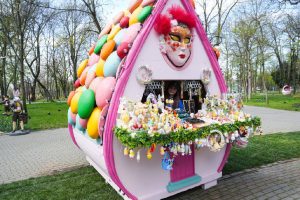
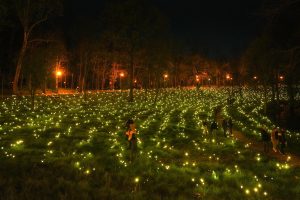
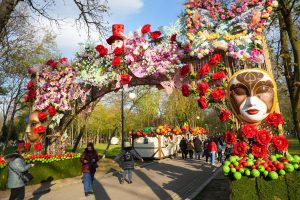
This spring, Craiova invites you to a meeting with magic in Nicolae Romanescu Park, where the Craiova Easter Fair 2026 transforms the Gazebo – Casa Bibescu area into a fairytale setting. Under the theme “Fairy Tale,” the fair promises an entire month of events, light, color, and a festive atmosphere.
Between April 3 and May 3, 2026, we wait for you to explore photogenic places on foot, enjoy the festive air, and take advantage of the perfect reason for a visit with family or friends.
The Easter Fair was included by Forbes magazine and European Best Destinations in the top five most beautiful destinations in Europe.
- Official Craiova Easter Fair Page: https://www.facebook.com/profile.php?id=61574398349082